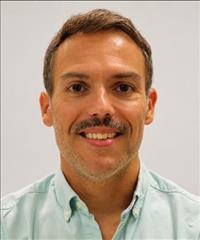
Carlos Quesada Granja has been an Assistant Professor in the Department of Computer Science and Artificial Intelligence at the University of Alicante since 2025. He holds a degree in Telecommunications Engineering from Miguel Hernández University of Elche and a PhD in Mechanical Engineering from the University of Zaragoza (2017), with an International Doctorate distinction. He also holds an MSc in Applied Mechanics from the same university. His research focuses on data science and artificial intelligence, particularly machine learning, dimensionality reduction, and time-series analysis.
He has conducted research at various universities and research institutions in Spain and France, including the Institute of Neurosciences of Alicante (2005 and 2010–2012), the University of Zaragoza (2012–2016 and 2019–2020), the Université de Technologie de Compiègne (2017–2018), and the University of Deusto (2020–2025). The common thread running through his research has been the extraction of interpretable information from complex data using mathematical and computational methods. Early in his career, he worked on the analysis of neurophysiological data and on mathematical decomposition and representation methods applied to biomechanical simulation and the study of microcapsule deformation. His research subsequently shifted towards machine learning and the analysis of large datasets, particularly electricity consumption time series. In this field, he participated in the EU-funded H2020 WHY project, which focused on studying household energy consumption behaviour using data science techniques. His current research explores dimensionality reduction methods aimed at identifying interpretable patterns in time-series data.
He has authored scientific publications in journals indexed in the Journal Citation Reports (JCR), conference proceedings, and book chapters, and has been awarded two six-year research merit periods (sexenios) by Spain's National Commission for the Evaluation of Research Activity (CNEAI). He has university-level teaching experience in Spain and France. He is a member of the Robotics, Vision and Intelligent Technologies (RoViT) research group at the University of Alicante and is affiliated with the Alicante Institute for Health and Biomedical Research (ISABIAL).